For businesses that rely on vehicles, even one serious accident can create significant financial and operational challenges. From vehicle repairs and medical expenses to liability lawsuits and lost productivity, Commercial Auto insurance claims can quickly become costly.
While having the right Commercial Auto Insurance is essential, businesses can also take proactive steps to reduce accident frequency and improve driver safety. One increasingly useful tool is the dash camera.
Dash cameras can provide video evidence of what happens before, during, and after a collision. More advanced systems can also identify risky driving behaviors and provide feedback to drivers. When combined with driver training and a strong safety program, dash cameras may help businesses reduce preventable accidents and potentially improve their overall risk profile.
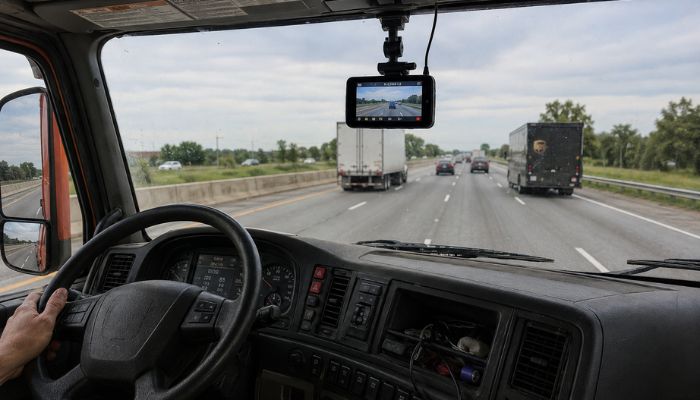
A commercial dash camera is a camera system installed in a business vehicle to record driving activity. Depending on the technology, a system may capture the road ahead, the driver, or both.
Some systems use GPS, telematics, collision detection, and artificial intelligence to identify events such as hard braking, sudden acceleration, distracted driving, or unsafe following distances.
The Federal Motor Carrier Safety Administration (FMCSA) has recognized the potential safety benefits of video event recorders, including identifying risky behaviors such as distracted driving and drowsiness and supporting collision analysis.
After an accident, determining who was responsible can sometimes be difficult. Drivers, passengers, witnesses, and other parties may provide conflicting accounts.
A dash camera can provide an objective record of the incident. Video may show traffic conditions, vehicle movements, lane changes, signals, and other circumstances surrounding a collision.
This evidence can help a business and its insurer better understand the event and evaluate a claim. It may also help discourage questionable or fraudulent claims when video demonstrates what actually occurred.
A dash camera does not guarantee that a claim will be denied or that an insurer will automatically reduce a settlement. However, having reliable documentation can make the claims investigation more informed and efficient.
Preventing accidents is generally better than dealing with them afterward.
Dash camera and telematics systems can help fleet managers identify patterns such as speeding, harsh braking, aggressive acceleration, distracted driving, and unsafe following distances. Businesses can then use this information to provide targeted coaching.
This matters because unsafe driving can create significant business and liability risks. The FMCSA identifies speeding, reckless driving, improper lane changes, and lack of attention among unsafe driving behaviors associated with commercial motor vehicle crashes.
For example, if a driver repeatedly brakes hard or follows other vehicles too closely, a fleet manager can address the behavior through additional training before it contributes to a serious accident.
A driver safety program is more effective when training is based on real-world situations.
Instead of relying exclusively on general safety instructions, managers can use recorded driving events to demonstrate specific behaviors that need improvement. This can make coaching more practical and relevant.
Businesses should approach driver monitoring as a safety and training tool rather than simply a disciplinary measure. Clear policies explaining how footage is collected, reviewed, stored, and used can help employees understand the purpose of the technology.
Reducing preventable collisions can potentially reduce the number and severity of Commercial Auto insurance claims over time.
Fewer accidents can mean fewer vehicle repairs, injuries, liability disputes, and business interruptions. A stronger safety record may also be helpful when discussing risk management practices with an insurance professional.
However, businesses should not assume that installing dash cameras automatically results in lower insurance premiums. Insurance pricing depends on many factors, including claims history, vehicle types, drivers, operations, coverage limits, location, and insurer underwriting guidelines.
A dash camera is best viewed as one component of a broader fleet safety and risk management strategy.
Technology does not replace insurance.
The right Commercial Auto Coverage remains essential for protecting a business against covered losses involving company vehicles. Depending on the policy, coverage may include bodily injury liability, property damage liability, collision, comprehensive coverage, and other options.
CF&P Insurance Brokers explains that commercial auto insurance can help businesses manage financial consequences arising from accidents, including property damage, medical expenses, and lawsuits.
A dash camera can complement that protection by helping businesses prevent accidents, document incidents, and improve driver safety.
Simply installing cameras is not enough. Businesses should consider integrating them into a broader fleet risk management program.
Helpful steps include:
Businesses should also make sure their camera systems comply with applicable laws and company policies concerning privacy, recording, and data management.
Dash cameras can be a valuable tool for businesses looking to improve driver safety, document accidents, and reduce preventable losses. But technology works best when it is paired with employee training, fleet management, regular vehicle maintenance, and appropriate Business Auto insurance.
The right insurance program can provide another important layer of protection when accidents occur.
CF&P Insurance Brokers is a third-generation, family-owned independent insurance agency that has served customers since 1937. Its team can help businesses evaluate their commercial auto risks and build coverage around their specific operations.
Ready to review your business auto coverage and risk management strategy? Contact us today at (925) 956-7700 to gain guidance on your Commercial Auto Insurance needs.
Also read: How to Choose the Right Commercial Auto Insurance for Your Business in California
Dash cameras cannot physically prevent accidents, but systems that provide driver alerts, monitoring, and coaching may help identify and correct risky driving behaviors.
Not necessarily. Some insurers may consider safety technology when evaluating a business, but premium discounts are not automatic and vary by carrier and policy.
Depending on the system, it may record the road, driver activity, GPS information, and collision-related events. Businesses should select technology appropriate for their operations and compliance requirements.
No. Dash cameras are a risk-management tool. They do not replace liability, physical damage, or other protections provided by an appropriate commercial auto insurance policy.